50 Engagement Photo Poses, Sorted by How Comfortable the Couple Is
Engagement photo poses are the thing couples worry about most before a session and think about least during it, which is exactly how it should go. The job of a pose is to give two people something to do with their hands and their attention so the camera can catch what is already between them. So this list is sorted not by style but by comfort, because a couple who has never been photographed needs different prompts from a couple who met on a dance floor.
Pick the section that sounds like you. Most sessions start in the first section and drift into the second by the end of the hour.
For couples who hate being photographed
These are movement prompts. No one has to hold a face.
- The walk. Hold hands, walk toward the camera, look at each other, not at me. Repeat it four times. The third one is always the picture.
- The walk away. Same thing, away from the camera, then one of you looks back.
- The lean. One of you leans against a wall or a tree. The other faces them and stands close. Talk about dinner.
- Forehead to forehead. Eyes closed. Breathe. This one works even for people who flinch at cameras.
- The hug from behind. One wraps around the other from the back, chin on the shoulder. Look at the view, not the lens.
- Fix something. Straighten a collar, tuck hair, brush a sleeve. Real touch reads as real.
- Sit on steps. Shoulders touching, legs at different angles so you do not match.
- The piggyback. Short, silly, and it breaks the tension for everything after.
- Walk and whisper. Say something embarrassing into their ear. The laugh is the frame.
- Hands only. A close picture of rings and fingers. No faces, no pressure.
- Look at the same thing. Point at a bird, a boat, a dog. Shared attention photographs as intimacy.
- The spin. One twirls the other under an arm. Blurry is fine.
- Nose to cheek. One kisses the cheek while the other looks at the camera and tries not to smile. They will fail.
- Coat share. Cold day, one coat, two people. Practical and close.
- The slow dance. No music. Sway. I will shoot from far away.
- Sit on the ground. Backs together, or one lying with their head in the other's lap. Grass, blanket, sand.
For couples who are fine with it
Slower, more intentional, still built around contact.
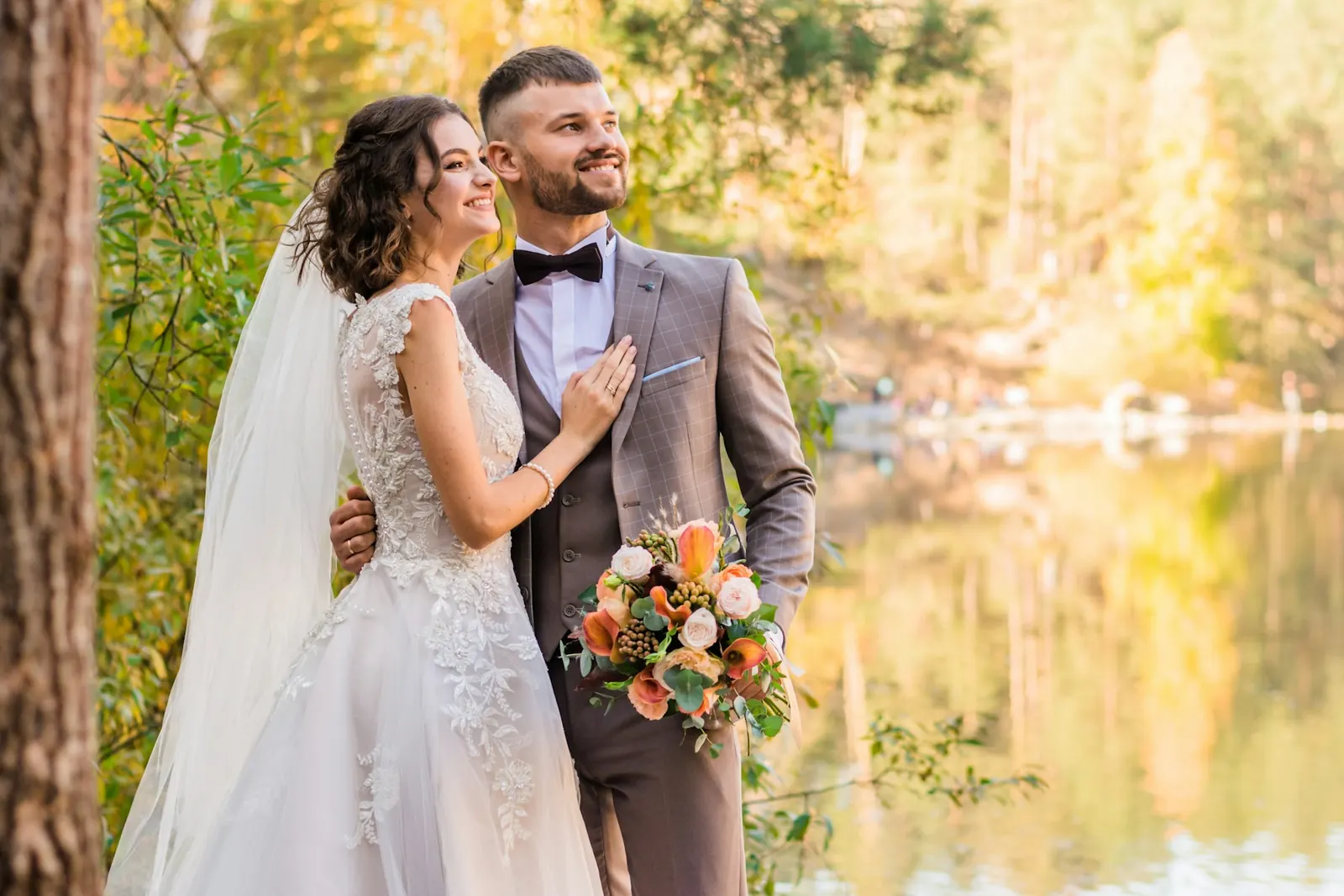
- The classic. Face each other, hands at waists, foreheads close, eyes open. Then eyes on me.
- Dip. A real dip, supported, with a laugh at the top.
- The almost-kiss. Stop an inch short. Hold it.
- Both looking at camera, bodies turned in. The portrait your parents want. Do it once, early, and move on.
- Hand on the chest. One hand flat on the other's chest, looking up.
- Seated, one behind. On a bench or ledge, one sits, the other stands behind with hands on shoulders.
- The lift. Short and safe. Hands under the ribs, feet off the ground for one second.
- Back to back. Standing, arms crossed, both looking over the same shoulder.
- Arm around, walking. Side by side, arm over shoulder, matching step.
- The doorway. One leaning in a frame, the other stepping in.
- Ring reveal. Hand on the other's face, ring to camera, eyes on each other.
- Kiss on the forehead. The one being kissed closes their eyes.
- Lying down, heads together. Shot from above. Feet in opposite directions.
- Window light. Indoors, one at the window, the other behind. The best frame of a rainy day.
- The look back over the shoulder. One walks ahead; the other follows and looks back.
- Carry the coat. Jacket over one shoulder, other hand in a pocket, holding hands anyway.
- Reading together. A menu, a map, a phone. Heads tilted together.
- Stand on something. A curb, a rock, a step, so the heights swap.
For couples who want editorial
Posed, still, and a little bit art-directed. These need good light and a willingness to hold it.
- Separate frames. Each person alone in the same spot, then composited side by side in the album.
- One in focus. One close to the lens, soft; the other sharp behind.
- The profile. Both in profile, facing each other, a gap between, in silhouette if the sky allows.
- Seated apart on a wall. Space between, both looking at camera. Cool, not cold.
- Hand on the neck. One cups the back of the other's neck; faces close, not touching.
- Shadow play. Hard sun, long shadows, hands held in the shadow.
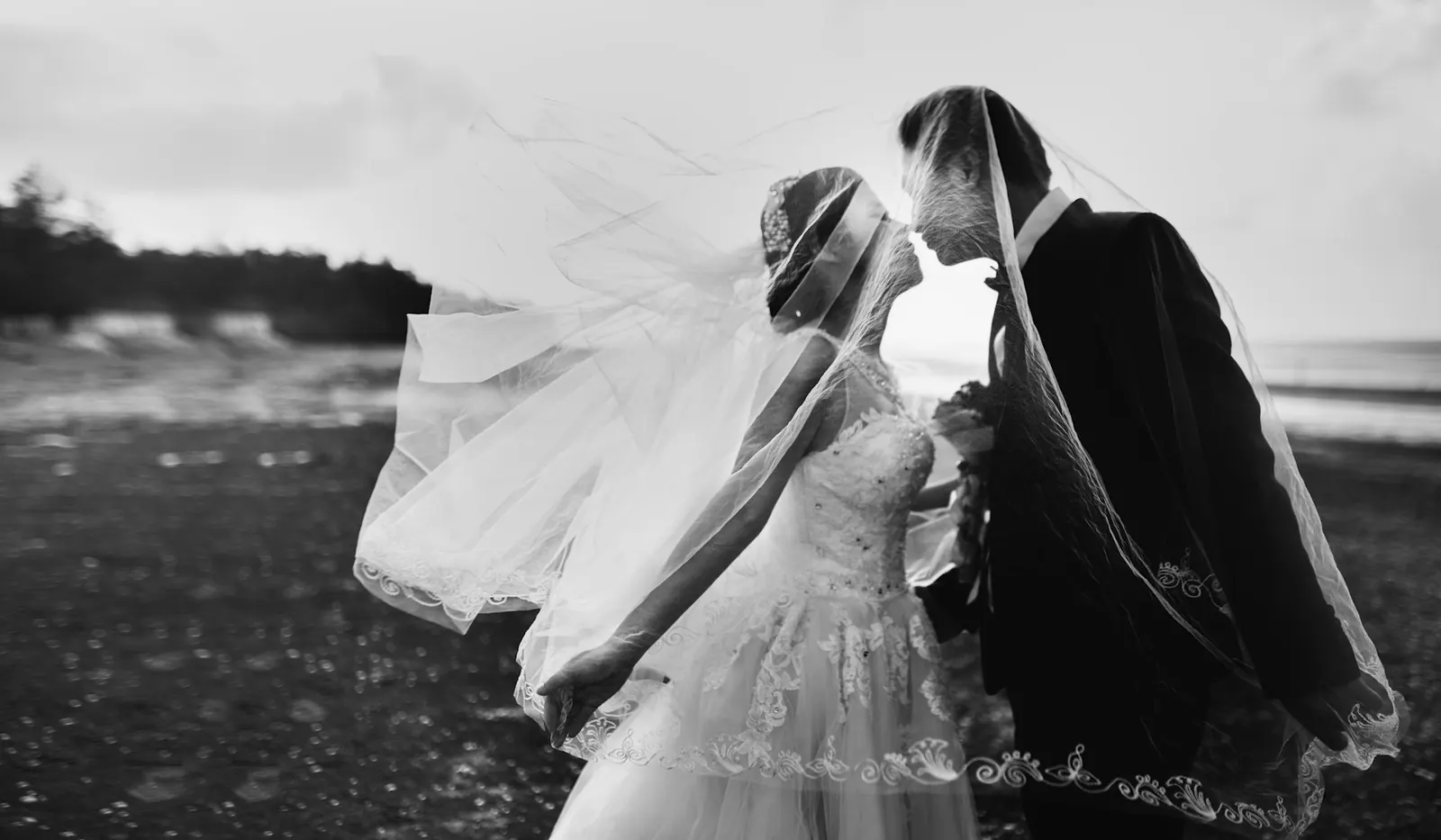
- Veil or scarf. Fabric caught in wind, framing one face.
- The mirror. Any reflective surface. Shoot the reflection, not the couple.
- Mountain scale. Tiny figures at the bottom of the frame, Utah doing the work. Our Mandi and Riley session has the version with a lake.
- Hands in frame, faces out. Crop to the shoulders. The ring, a sleeve, a collar.
- Lean away, hold on. Both lean outward, holding hands at full stretch.
- Seated on the floor, formal. Knees up, backs straight, against a plain wall.
- Walking through a crowd. Downtown, lunch hour, you are the only still thing.
- Car. One in the driver's seat, the other leaning in the window.
- Umbrella. Rain or not. A single umbrella makes a frame inside the frame.
- The last one. Whatever pose came easiest during the hour. Do it again at the end, in the best light.
How to choose outfits for these poses
Movement prompts need clothes that move: skirts, loose trousers, untucked shirts. Editorial prompts favor clean lines and solid colors, because texture competes with faces. Avoid matching exactly; share a palette instead. The Sarah Winward florals story is a good reference for a palette that reads as one picture without anyone matching.
What a photographer actually says
Almost none of these are given as poses on the day. They are given as instructions to do something: walk here, fix that, tell them the thing. The pose is the result, not the request. If you are shooting your own engagement pictures or helping a friend, say the action and wait. The frame comes about three seconds after the instruction, when the couple forgets it was an instruction.
Timing, briefly
The best hour is the last one before sunset, and the second best is the first after sunrise. An engagement session usually runs sixty to ninety minutes, long enough to work through one section of this list and dip into another. Our wedding photography timeline guide explains how the same light planning scales up to a wedding day.
For couples planning a session somewhere new, a quick check of local permit rules saves a surprise. Utah's state parks, for example, list their photography permit requirements by park, and a handful of the most photographed spots do require one.
The point of all of it
Fifty is more than anyone needs. A good session uses eight or ten, mostly from the first two sections, and the ones that stick are the ones where the couple stopped thinking about the camera. Start with the walk. Everything else follows.